
The Plays that Push Back
Go on. Ibsen can take it.


I’ve been haunted by Henrik Ibsen for much of my professional life.
In my twenties and thirties, I played Hedda Gabler four times, once interpreting her suicide as a modern dance (in my athletic enthusiasm, I tore the labrum in my shoulder in the final “release”). Once in a wild retelling set to a Radiohead and David Bowie underscore where I literally climbed the walls.
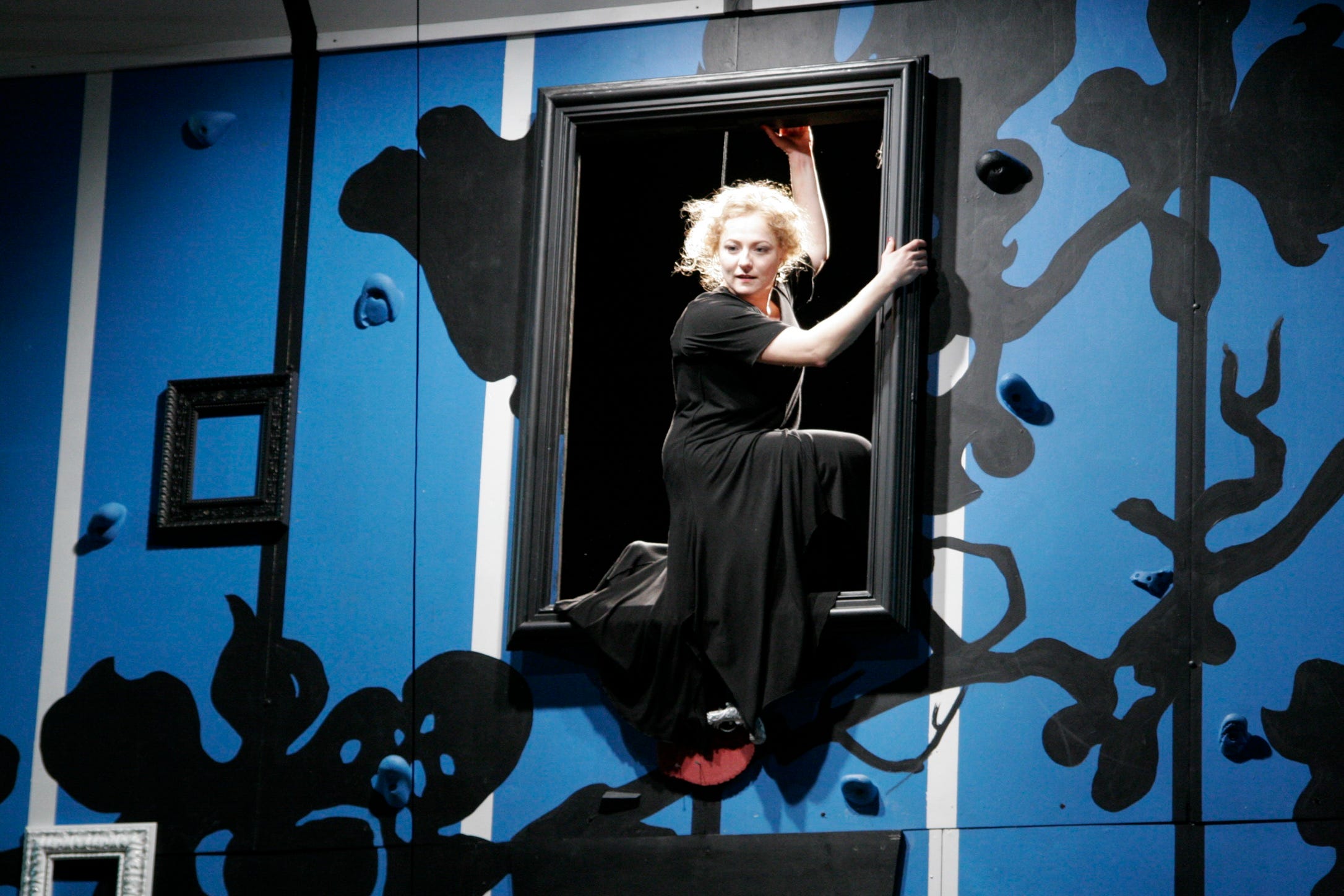
I have sunk under her dissatisfaction, lusted after her Løvborg, tormented her Tesman, and conspired with her Judge Brack without realizing I was becoming ensnared. For almost a decade, I taught A Doll’s House to freshmen who were encountering Nora’s door slam for the first time, and in the dating tumult of my twenties I fancied myself slamming doors on my own oppression, drawing from his breakup scene with flare and force.
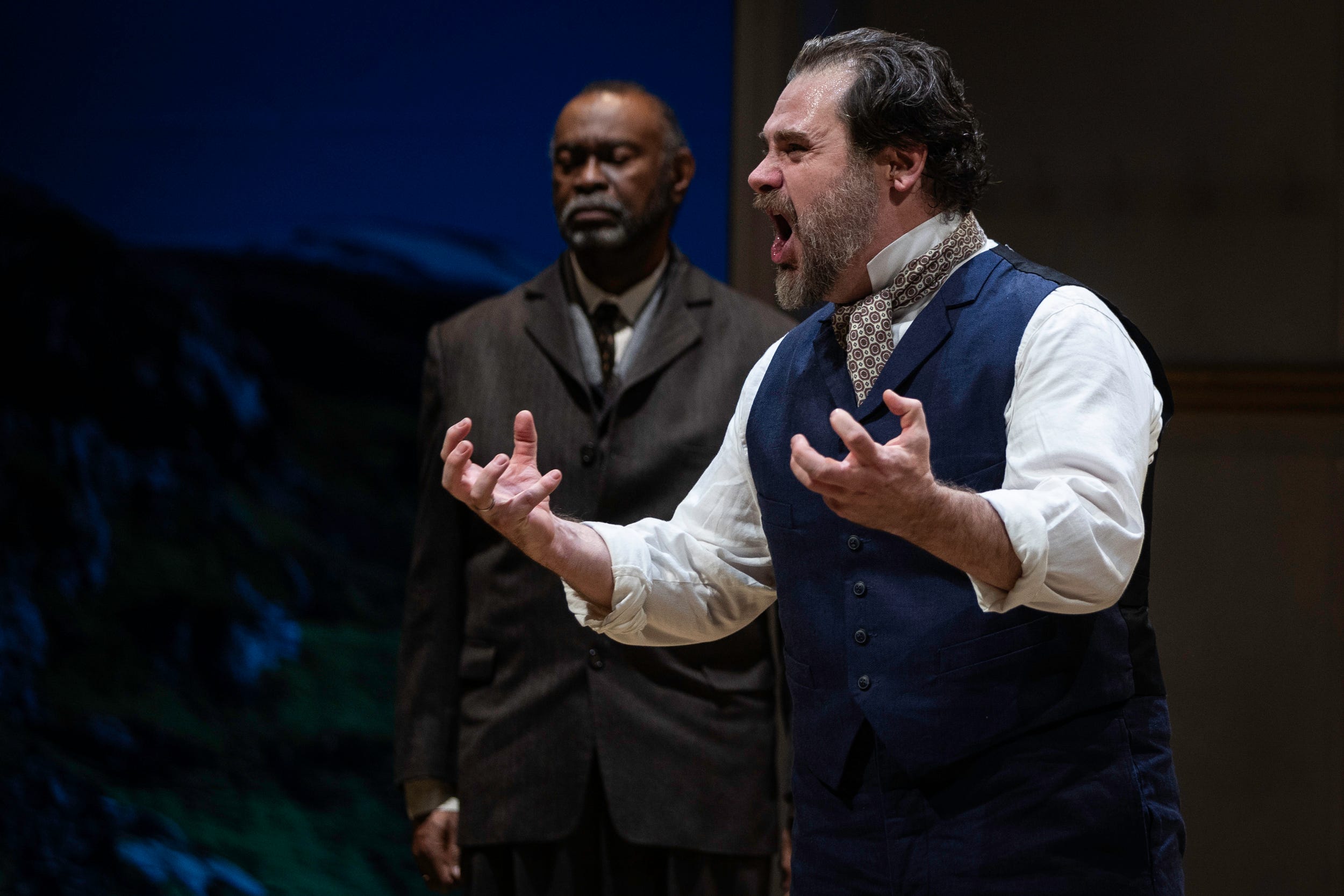
This winter, with An Enemy of the People at Pittsburgh Public Theater, I came to Ibsen older, clearer, and also as a director for the first time. And instead of haunting me, he dared me to go further than I have before — with my process, my vision, and my trust in a text.
Ibsen’s work demands actors build a circuitry under his dialogue that sets off an explosive ripple of events. His characters believe so deeply and act so boldly, oftentimes they shock themselves with their own actions. For directors, Ibsen challenges us to interrogate his plays with impunity. A truly great play can withstand any pressure I exert on it — and in this era of political fragility, that kind of dramaturgical integrity is both a comfort and a call to action.
There are exciting, intelligent contemporary plays that begin to give under the weight of a rigorous rehearsal process. Years ago, I had the chance to work on a great production of Jon Robin Baitz’s play Other Desert Cities. Despite a rehearsal process filled with comedic revelations and earnest grief, at some point the cast discovered that when we pressed on the timeline — interrogating the sequence of the family’s revelations, the plausibility of events around the brother’s death, and the function of memory — certain elements didn’t hold. Not enough to derail an audience, but in a way that limited how deeply we could push into the backstory.
But Ibsen’s plays push back. They bear weight.
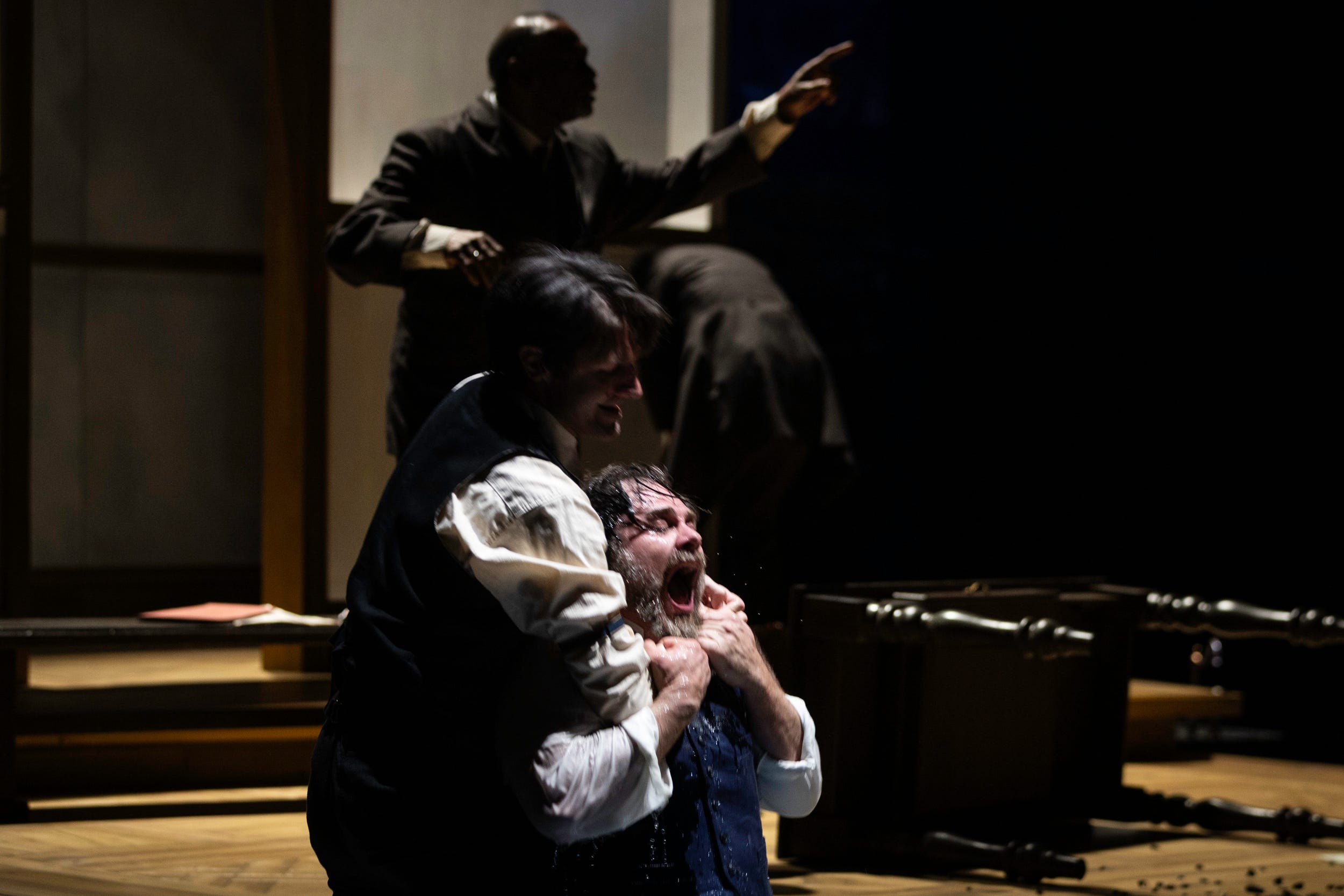
For Enemy of the People, the actors, designers and I put our hands into the corners of the world of the play, feeling for the details. We discovered deep passages of Norwegian radicalism, class anxiety, environmental crisis and civic cowardice. We found his love and wonder for the natural world, and we found his full-blooded critique of the complex systems that sustain a society.
The press. The politicians. The workers. The academics. The ambitious young men and hungry young women. The capitalists. The idealists.
These factions intersect to compose both a small Norwegian town in 1882 and a thrashing American democracy in 2026.
Ibsen wrote Enemy as a satire to retaliate against the myriad groups that denounced his Ghosts, but he accomplished way more than revenge. He built a tightly coiled engine of cause and effect: clear and muscular circumstances, a plot so tight it snaps at its climax, and a rich subtext that exposes our most primal needs — belonging, recognition, power. Ibsen’s Enemy does not wander into philosophy or exposition. It deftly dramatizes systems under stress.
That durability invites us to press harder against the play. To push until we see ourselves in its outlines.
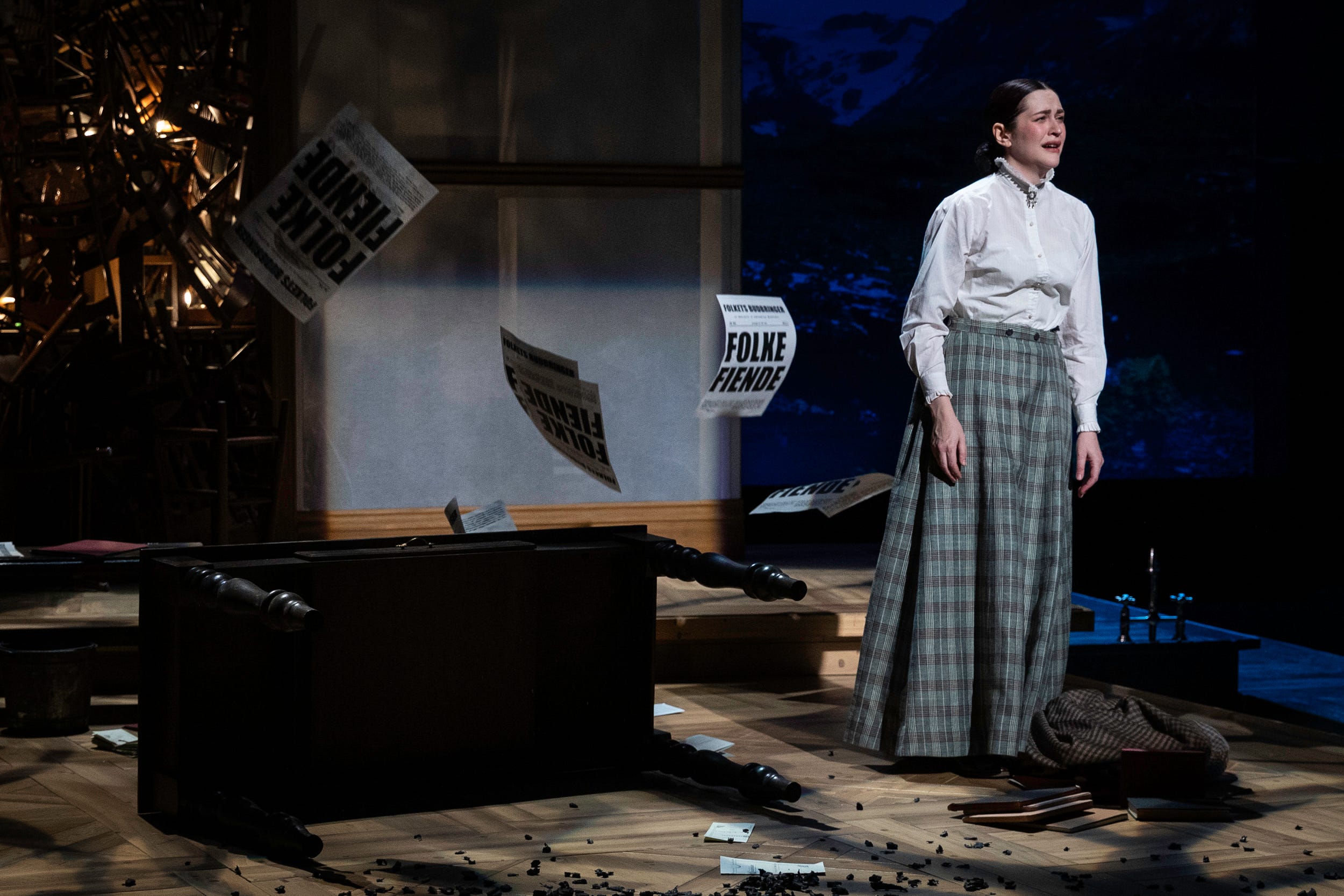
This Enemy is not only an Ibsen classic; it’s also an Amy Herzog adaptation. A reviewer recently described her work as giving the play “the Ozempic treatment.” Yes, she has cut and compressed. She has laced cultural catchphrases throughout the script that are subtle but ring for a contemporary audience — like “behind you like a wall” and “another kind of swamp.” She has omitted the wife-mother character that mostly serves as a punching bag for the protagonist and instead consolidates the high stakes for the women in this world into one unabashed heroine in the character of Petra, sharpening the play’s generational and ideological conflict. Herzog has streamlined exposition and boiled down the dialogue into an adaptation that is all action. What she may have sacrificed in nuance or backstory, she replaces with velocity and a lean urgency that doesn’t let us look away.
In taking on Ibsen with her recent adaptations of A Doll’s House and Enemy, Herzog joins a host of living female playwrights including Kate Hamill and Lauren Gunderson who are re-reading and restoring these canonical works by tearing away what’s flimsy or fat, and re-introducing the muscular heart of these stories to a new generation of artists, audiences, and yes, women.
Perhaps Ibsen and the necessary ego he must have had to pen these vivid dramas would initially struggle with the idea of being adapted. While he resisted being labeled a feminist he was undoubtedly exploring women’s autonomy in his works. I think he would ultimately thrill at the notion of a cohort of bright female writers and directors carrying his works forward while slamming the door on a past that cannot contain them.